From Flutter POS to Zirel POS
What I added on top of the open source Flutter POS to make a POS for real shops, and how the free and paid plans work.
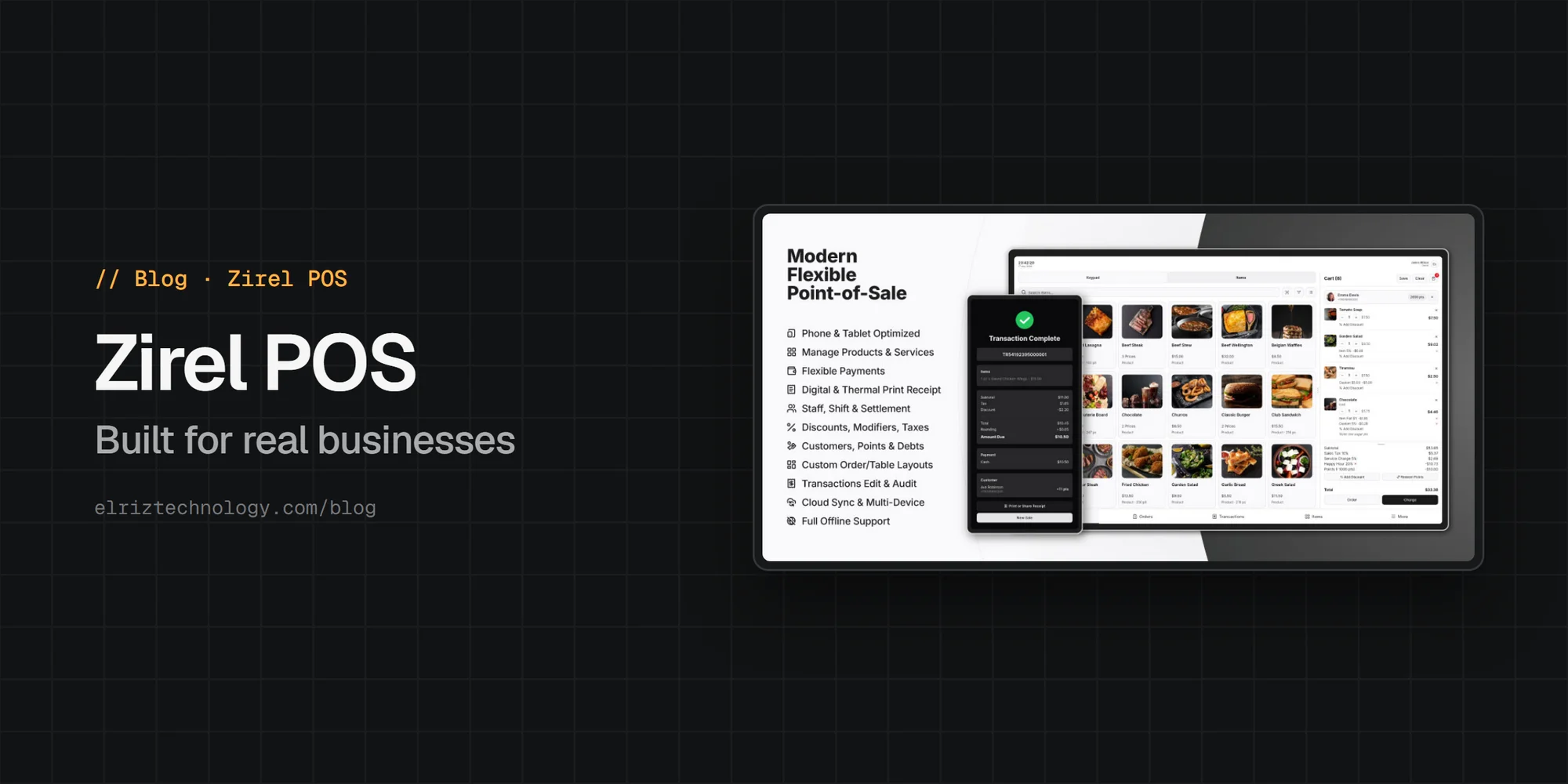
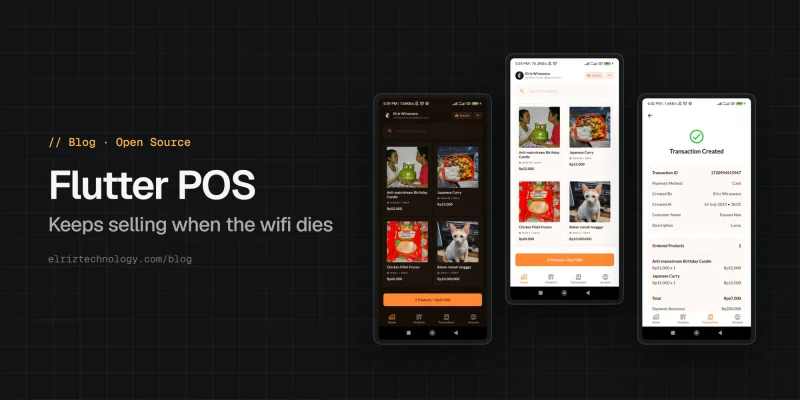
If you open the README of Flutter POS, the first line says it's the base model of Zirel POS. Flutter POS is the open source reference app. Zirel POS is the product built on top of that base, for shops to actually use every day. It's launching soon on Android.
This post is about what had to change between the two. Flutter POS has products, a cart, transactions, receipts and offline sync. That's enough to learn from, but a real business needs a lot more.
Different businesses need different screens
Zirel POS is meant for retail, F&B and services. A minimarket, a cafe and a clinic all need a POS, but they use it very differently. The cafe needs tables and a kitchen. The minimarket needs barcodes and stock. The clinic sells services and doesn't track stock at all.
If the app shows everything to everyone, the cashier gets lost in menus they never use. So in Zirel POS most features can be turned on or off per business. You turn on what you need, like checkout, orders, stock, staff or loyalty, and the rest is hidden.
The catalog works the same way. One catalog can have three kinds of things: products with inventory, simple items without stock, and time-based services. Products can have variants, and stock is tracked per location.
Orders
Zirel POS has orders with "order points", which can be tables, rooms, bays or any label you want. You can arrange them in your own layout that looks like your floor, or just use a grid or list. Orders move through Scheduled, Processing and Ready, and you take payment when the order is done. Takeaway, scheduled and dine-in orders are all in the same place.
Staff, shifts and customers
This is the part that matters after the first few days of using a POS.
Staff log in with a PIN and have their own permissions. Shifts are opened and closed with a cash count and a settlement report, and the shift history is kept. If the cash doesn't match at the end of the day, you can see which shift it was.
Customers have profiles, can earn and redeem points at checkout, and if the business allows credit, the app tracks what they still owe. A lot of small shops still keep that in a notebook.
You can also export sales reports and shift history to Excel.
Offline, like Flutter POS
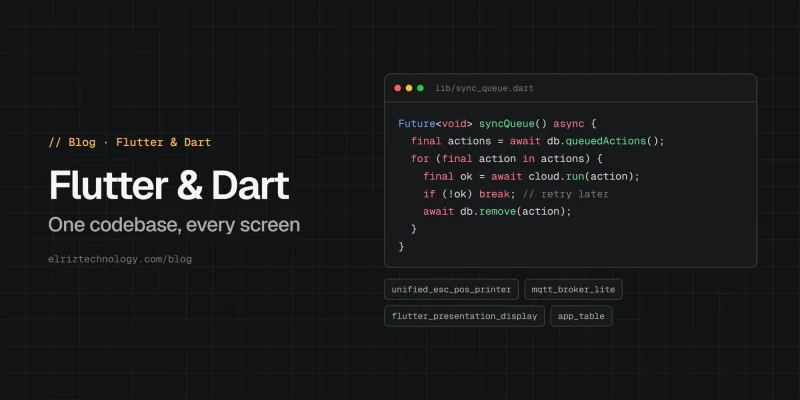
The offline first idea is the same as Flutter POS. Everything runs locally on the device, so you can take orders, charge customers and print receipts without internet. When the device reconnects, cloud sync updates sales, stock and settings across devices and locations.
What's new is that one business can have several devices doing different jobs. On the paid plans, each device can switch between five modes: POS for the register, Orders for the kitchen or pickup, Handheld for taking orders at the table, Inventory for receiving and transferring stock, and Dashboard for the owner. A device can be locked to one mode, so the kitchen tablet only ever shows orders.
Receipts
Receipts, kitchen tickets, settlement reports and debt slips all have configurable layouts. It prints to 58, 72 and 80 mm thermal printers, and receipt rendering works in any language, including Chinese and Japanese. You can also share a receipt as an image instead of printing.
Zirel AI
There's an AI assistant built in. It can analyze sales and operations, and it can answer how to use any feature in the app. Using your business data is optional. If you turn data access off, the AI stays on help only.
Free and paid
The core POS is free forever, no card required. The free plan runs on one device and one location, with up to 25 items, and the data stays on the device only. It also has ads.
Paid plans start at $2.79 a month (Starter), and add cloud sync, more items, more devices and more locations, and remove the ads. Pro is $8.49 and Business is $13.99 a month, cheaper if you pay yearly. The full comparison is on zirelpos.com.
So the free version is basically an offline POS on one device. Cloud sync and multiple devices are what the paid plans are for.
Where to start
If you run a shop, zirelpos.com is the place to look. If you're a developer and more curious about how the offline part works, the Flutter POS source is open. And if you have questions about either, the contact page comes straight to me.